You invested in a water softener to protect your plumbing and eliminate hard water problems. But getting the most out of that investment requires one critical step: setting your hardness level correctly. This simple programming step determines whether your system runs efficiently or wastes resources.
What Is a Water Hardness Setting?
Water hardness refers to the concentration of dissolved minerals like calcium and magnesium in your water supply, measured in grains per gallon (gpg) or parts per million (ppm). San Antonio is known for having very hard water, typically ranging from 15 to 22 gpg. Your water softener’s job is to bring that down to soft water levels, ideally below 1 gpg.
When you set the hardness level on your softener, you’re programming the unit with information about how hard the incoming water is. This allows the system to calculate how much water it can treat before it needs to regenerate—the process of cleaning itself with salt brine to remove mineral buildup and restore its softening capacity.
A higher hardness setting tells the softener your water contains more minerals, triggering more frequent regeneration to keep up with demand. When set accurately, your system uses the optimal amount of salt and water, ensuring you consistently receive soft water throughout your home.
How to Set Your Water Hardness Level
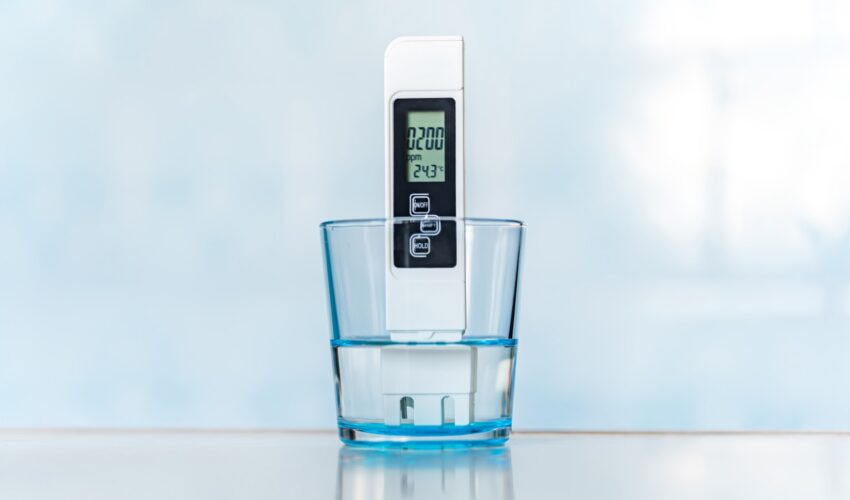
Get Your Water Tested: Have a professional water test performed or use a home testing kit to determine your water’s hardness level. A complete water test will provide two key numbers: your water hardness level (gpg) and your iron content (ppm), if present. Professional testing provides the most accurate results and is complimentary with our Complete Plumbing and Softener Maintenance contracts.
Account for Iron: Iron is measured separately from hardness, but it impacts your softener the same way calcium and magnesium do. If your water contains iron, common in well water, add 5 grains to your hardness setting for every 1 ppm of dissolved iron. For example, water testing at 15 gpg hardness with 2 ppm iron should be set to 25 gpg.
Locate Your Control Panel: Depending on your model, you’ll either turn a dial to the correct number, enter it digitally, or adjust it through an app. Check your owner’s manual to determine how to control your specific system.
Monitor and Adjust: Watch your water quality over the next few weeks and fine-tune if necessary. Water hardness can fluctuate over time, so minor adjustments may be needed.
Signs Your Hardness Setting Is Incorrect
Setting Too Low:
When your water hardness setting is too low, you may notice issues commonly associated with untreated hard water. This includes:
- White, chalky residue on faucets and dishes
- Soap that doesn’t lather well
- Stiff laundry
- Water spots on glassware
Setting Too High:
A setting that’s too high won’t affect your water quality, but it will hurt your wallet. Your system will use excessive amounts of water and salt, reducing its efficiency.
- Softener regenerating too frequently
- Going through salt much faster than expected
- Higher water bills
Changes in your water supply can affect performance even with a correct setting. If you notice sudden changes in water quality, it may be time to retest rather than immediately adjusting your setting.
Maintaining Optimal Performance
To care for your system, remember to keep the salt tank at least half full, use high-quality softener salt, and have your system serviced annually. During routine maintenance, a technician can retest your water and verify that your hardness setting is still appropriate. At North East Air Conditioning, Heating & Plumbing, water testing is included in both our Complete Plumbing and Softener Maintenance contracts.
Understanding and properly setting your water hardness level ensures your water softener works efficiently, saves you money, and protects your home from the damaging effects of hard water. If you’re unsure about your current setting or experiencing any issues, schedule an appointment with us to test your water and optimize your system’s performance.