When a pipe bursts or a leak springs out of nowhere, every second counts. One of the best ways to protect your home from major water damage is knowing exactly where your water shut-off valves are and how to use them.
Where to Find Your Main Water Shut-Off Valve
The location of your shut-off valve can vary depending on the age and layout of your home. Below are the most common places to look.
First, check outside near your water meter. Look for a round or rectangular plastic or metal lid on the ground close to the street or sidewalk labelled “water”. When you open it, you may see two valves: one for the city and one for the homeowner. The homeowner’s valve is usually on the house side of the meter. This is the one you’re permitted to use.
If you don’t find a valve there, it may be in the yard inside a small metal box, plastic enclosure, or mounted just above ground level. Look inside to find a lever-style handle or a round “wheel” knob.
Finally, check inside your house near the water heater or softener. Water softeners almost always have a valve installed nearby that will shut off the water to all interior water pipes. Water heaters usually have a valve that will shut off the hot water, but sometimes have an additional valve that will shut off all interior water. In townhomes and some commercial buildings, the valve may also be kept inside. Check in areas like the utility room or the garage, especially near the water heater or softener.
Not every home has a water shut-off valve intended for use by the homeowner. If you can’t find one, call a licensed plumber to have one installed. They’re an invaluable part of your home’s infrastructure.
How to Operate Your Water Shut-Off Valve
Once you find the valve, it’s a good idea to get familiar with how it works before an emergency strikes. There are two common valve types:
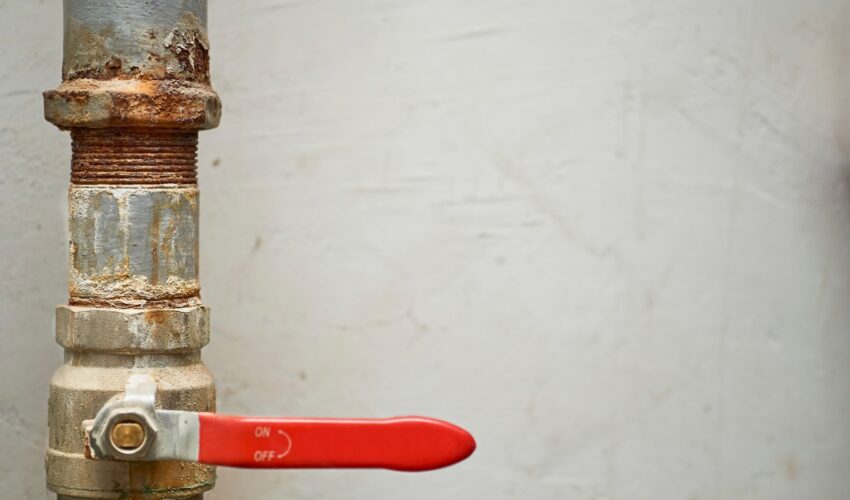
- Ball valve (lever handle)
A quarter-turn lever handle controls a ball with a hole through it.
-
- When the handle is parallel to the pipe, the hole in the ball aligns with the pipe, allowing water to flow through.
- Turn the handle perpendicular to the pipe to rotate the ball to block the opening and stop the water.
- Gate valve (wheel knob)
Common in older homes, this valve works by lowering or lifting a small “gate” or wedge inside the pipe.
-
- Turn clockwise to shut off the water.
- Turn counterclockwise to restore flow.
- Note: gate valves may feel stiff if they haven’t been used in a while.
When You May Need to Use It
Knowing where your main shut-off valve is, and using it quickly, can save you thousands of dollars in repairs. Here are some situations when you need to stop water from flowing to your entire home.
- Burst pipe. A burst pipe can cause extensive damage in minutes. Turning off the water right away helps protect floors, walls, and belongings.
- Major leak. If you see water pooling, spraying, or dripping heavily, shut everything off until a licensed plumber can inspect the problem.
- Whole-house plumbing work. Any time a plumber needs to service the main water line, replace major components, or make repairs that affect water flow throughout the entire home, the main shutoff valve should be turned off.
Individual Fixture Shut-Off Valves: A More Convenient Option
Before shutting off the water to your entire home, check if the problem is isolated to a single fixture. Most sink faucets, toilets, and appliances have their own shut-off valves located directly under or behind them.
For smaller issues, like a leaking toilet or dripping faucet, closing the individual shut-off valve allows you to address the problem without disrupting water service to the rest of your home. Note that after long periods of disuse, individual fixture shut-offs, also called stops, often do not shut off all the way and may leak some water even when turned off.
Need Help? We’re Just a Call Away
If you can’t find your valve, it won’t turn, or you’re dealing with a leak, North East Air Conditioning, Heating & Plumbing is here to help. We’re a family-owned company proudly serving the San Antonio area with honest, reliable plumbing and HVAC service.